EarMotion Sign in Create account
35 sounds placed on a map
Click, then wander A prepared piano, placed on a map. No account, nothing to install.

A map does not illustrate sound. It becomes the score.

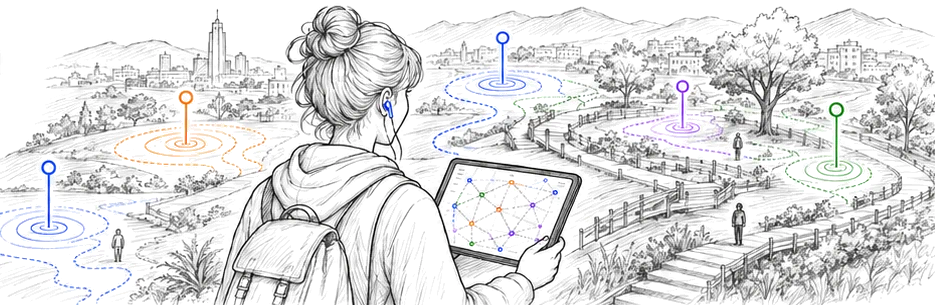
Place sounds on a map, each with its own zone. Someone walks through and the mix recomposes — on headphones, in a room, or outdoors on foot.

Three steps

Place, draw, walk through

There is nothing else to learn. The rest — headphones, loudspeakers, GPS — only changes how you listen to what you wrote here.

  1. 1

    Place a sound

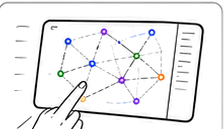
    A recording, a piece of music, a voice. It becomes a point on the map, wherever you choose.

  2. 2

    Draw its zone

    A circle, or any shape. That is where it can be heard, fading gradually — loud at the centre, gone at the edge.

  3. 3

    Someone walks through

    With a mouse, a finger, or by actually walking. The mix recomputes at every step: what you hear depends on where you are.

The same map, everywhere

Write once. Listen however you like.

Elsewhere, placing a sound in the field and spatialising it in a room are two separate toolchains. Here it is the same file.

On headphones

Sound turns around your head. Nothing to install: a web address is enough, on a computer as on a phone.

In a room

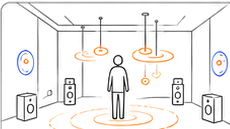
Up to thirty-two loudspeakers, ambisonic or by zone. The same map, played at the scale of a place.

Outdoors, by GPS

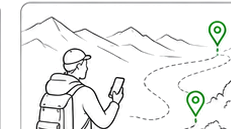
The map lies over real ground. You walk, and the soundscape changes because you changed street.

The audio outputs guide (in French) explains what to adapt from one kind of listening to another — and what does not adapt.

Open to all, no account

Maps you can listen to right now

Each one opens in the browser. The drawing is the map itself: every dot is a sound, every size is its zone of influence.

Loading maps…

Two uses, one gesture

Invent a territory, or keep the memory of the one that exists

Sound creation

Sound as a work: signed, situated, written for a place and a date.

  • Sound walks and GPS journeys, outdoors
  • Multichannel installation, up to 32 loudspeakers
  • Binaural listening on headphones, anywhere
  • Branching narrative, listening that follows movement

Sound heritage

Sound as a document: it must outlive whoever collected it.

  • Play a field collection back where it was made
  • Layer the eras of one place and move between them
  • Oral history, archives, field ambiences
  • A map is an open file, portable and archivable
And beyond

Where nobody expects a sound map

Four fields where the need already exists and the tool does not: hearing rather than reading a report.

Public consultation and noise

Let people hear a development before and after, in a public meeting, instead of showing a decibel map nobody can read.

Ecoacoustics

Thousands of hours of geolocated points analysed today only as curves: walk through them by ear, on the ground where they were captured.

Health and old age

Soundscapes that recompose with the hour, the season and the room — with no software to install in a care home.

Accessibility

A sound that points a direction, instead of a text that describes it.

Compose the map. Let someone walk it.

The account is free, there is nothing to install, and your maps stay files you can take with you.

32output channels, plus binaural and ambisonic
GPSthe listener walks, the map follows real ground
0installation: a web address is enough
.jsona map is an open file, portable and archivable